

It is intended for use for feed purposes and for processing. White lupine grain can be used as a high-protein supplement instead of soya meal in the diets of cattle, pigs and poultry. Recommended for cultivation in the Central Black Earth, Middle Volga regions, southern and south-western parts of the Central region.
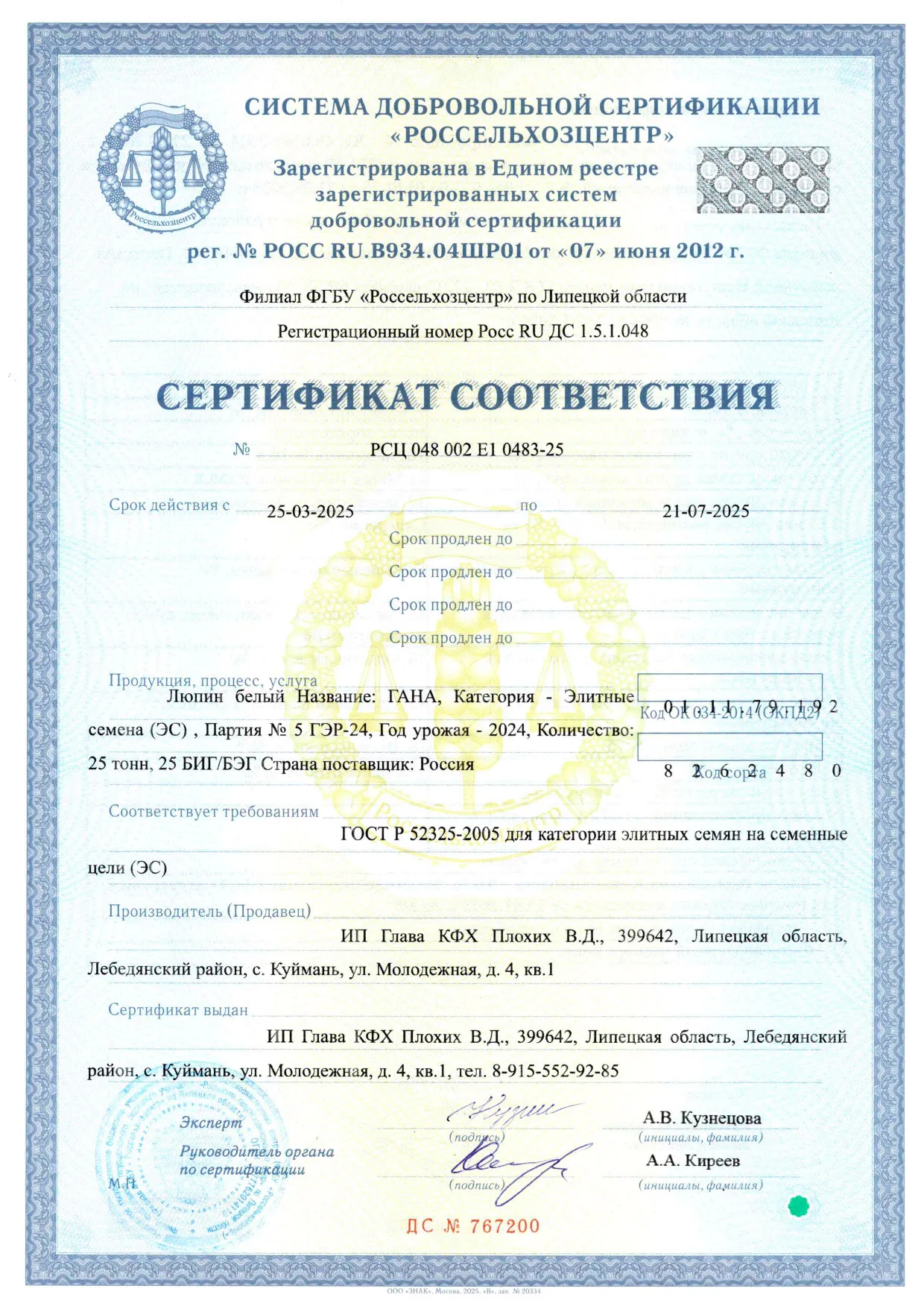
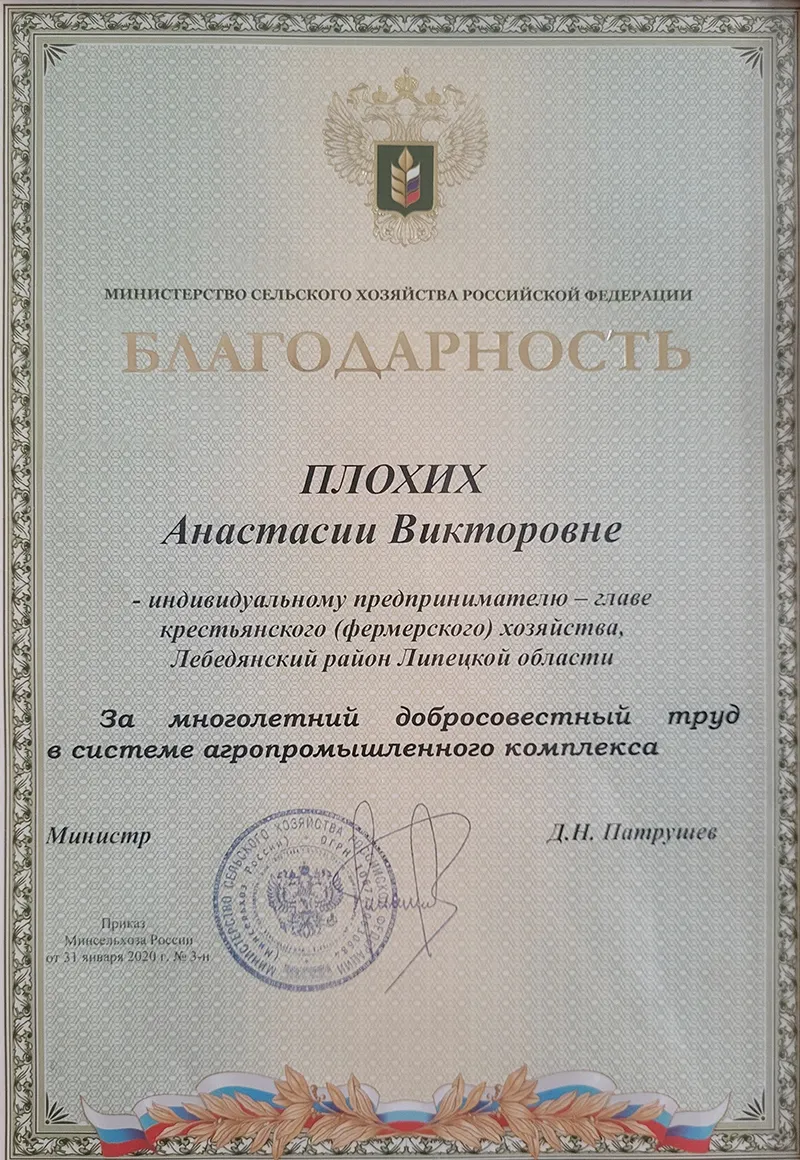
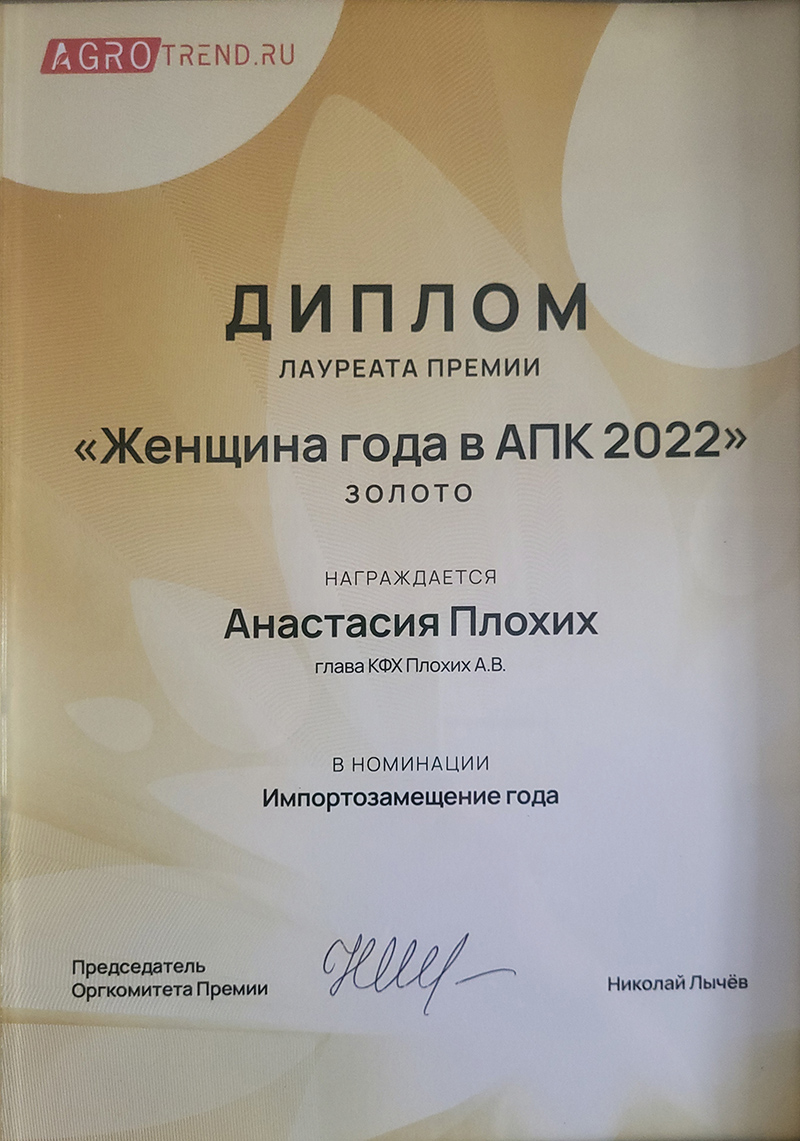
The variety of white lupine (Lupinus albus L.) "Ghana" was created in the K.A. Timiryazev Russian State Agricultural Academy. Patent for breeding achievement No 11202. The variety "Gana" received a diploma and a gold medal at the exhibition "Golden Autumn - 2021".
Grain with a high crude protein content (37-38%) for the production of high-protein feed products for use in poultry and high-yielding animal diets. Unlike soya, it does not contain trypsin inhibitors. The variety is fully suitable for industrial technology: high bean attachment (40-50 cm), beans do not crack.


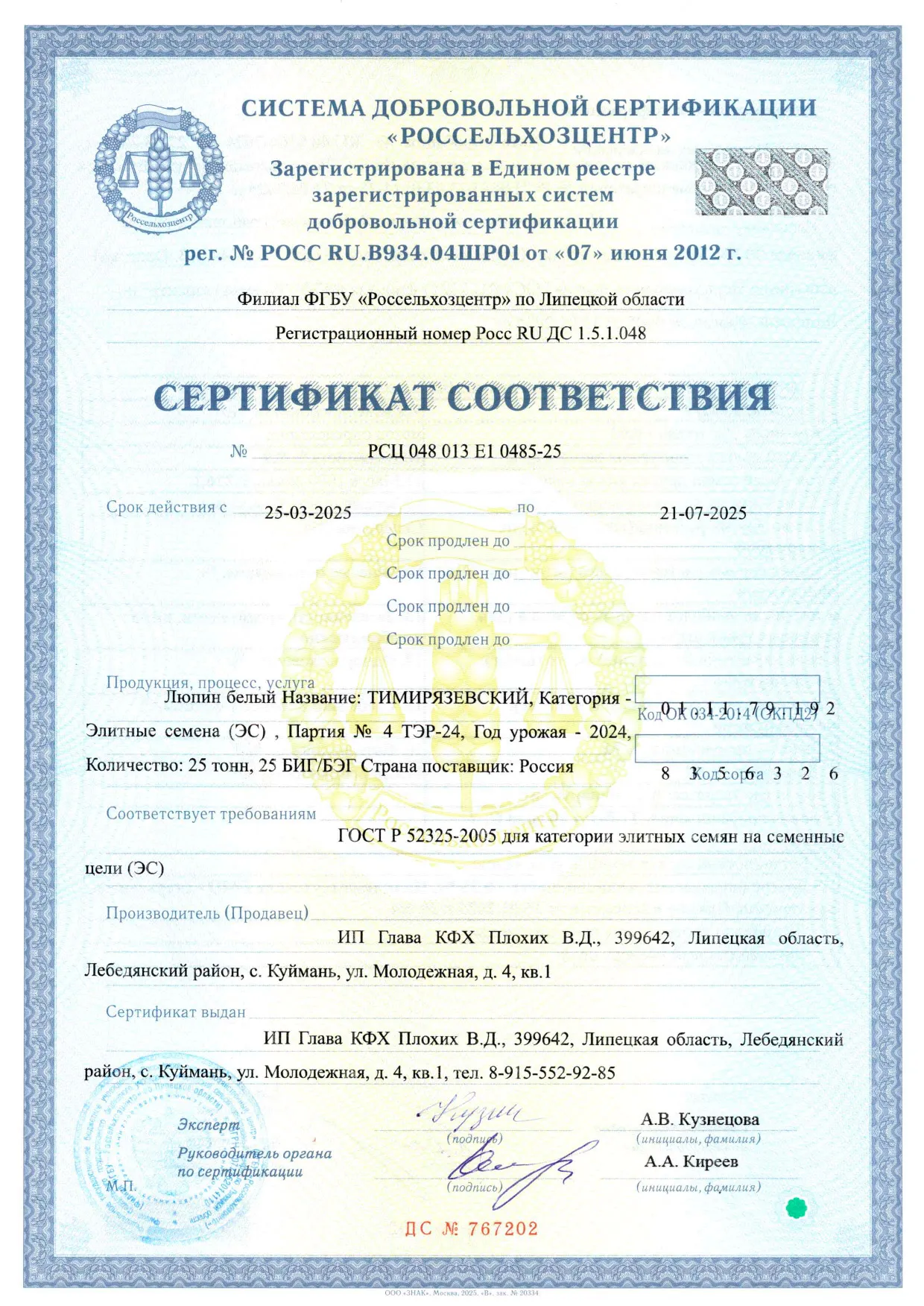
The variety of white lupine (Lupinus albus L.) "Timiryazevsky" is included in the State Register of Breeding Achievements and allowed for production in Russia since 2018. The variety was created at the K.A. Timiryazev Russian State Agricultural Academy. The patent for breeding achievement No 10316.
It is intended for use for feed purposes and for processing. White lupine grain can be used as a high-protein supplement instead of soya meal in the diets of cattle, pigs and poultry. Recommended for cultivation in the Central Black Earth, Middle Volga regions, southern and south-western parts of the Central region.
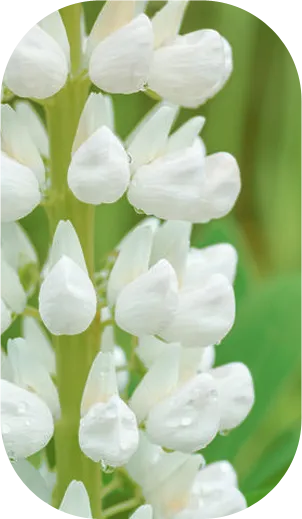
Middle Volga regions, southern and south-western parts of the Central Region. Drought-resistant. The yield of the variety in the Central Black Earth Region is from 30 kg/ha. The plant is low - 40-50 cm. The bean is long, the type of bean is husky, the number of beans - 10-12. The seeds are medium-sized - 8-10 mm, round-angular in shape, white with a creamy tinge.
Cultivation of white lupine variety allows to increase the production of vegetable protein up to 15 kg/ha. The seeds contain 35-40% protein, 10-12% fat.
The variety of white lupine (Lupinus albus L.) "Ghana" was created in the K.A. Timiryazev Russian State Agricultural Academy. Patent for breeding achievement No 11202. The variety "Gana" received a diploma and a gold medal at the exhibition "Golden Autumn - 2021".
Grain with a high crude protein content (37-38%) for the production of high-protein feed products for use in poultry and high-yielding animal diets. Unlike soya, it does not contain trypsin inhibitors. The variety is fully suitable for industrial technology: high bean attachment (40-50 cm), beans do not crack.
The variety is fully suitable for industrial technology: high bean attachment (40-50 cm), beans do not crack and do not crumble at maturity. The mass of 1000 seeds is 350-360 g, yield - from 35 c/ha, plant height - 60-65 cm. White lupine can assimilate hard-soluble phosphates of the soil. The fruits of the "Ghana" variety ripen 5 days earlier than the fruits of the "Timiryazevsky" variety.
Grain products of the new variety are used to solve the problem of plant protein deficit, reduce soya imports and ensure Russia's protein independence.
Lupine yields are at least twice, and sometimes three times higher than soya.
Bean attachment in white lupine is higher than in in white lupine than in soya. This avoids yield losses. In soybeans, the beans are attached to the lower layers, so the cutterbar cannot always cut them off completely. In lupin, on the other hand, the beans are attached at a height of 40-50cm. 40-50 cm, so that the maximum yield can be harvested even in dry weather.
When ripe, the fruit of the lupine do not crack or fall off. The plants do not overgrow in case of excessive moisture.
The crop is characterised by high content of protein and trace elements, high digestibility of amino acids in the product. Approximately 40-50% of lupin seed protein is made up of amino acids. The total amount of essential amino acids is 35-55% of lupin seed protein.
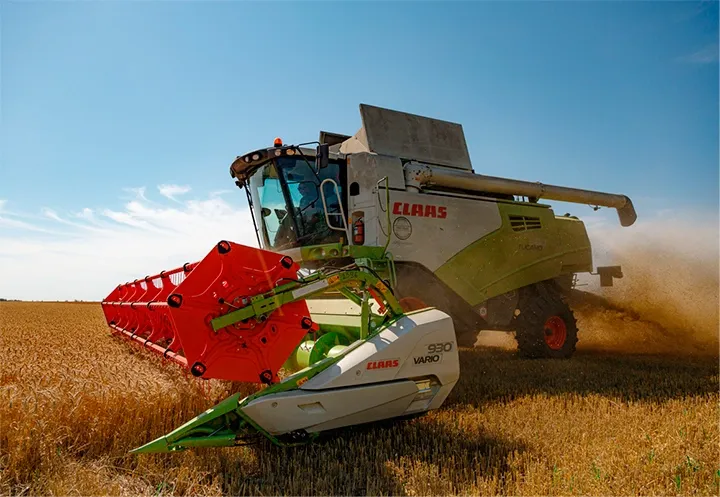
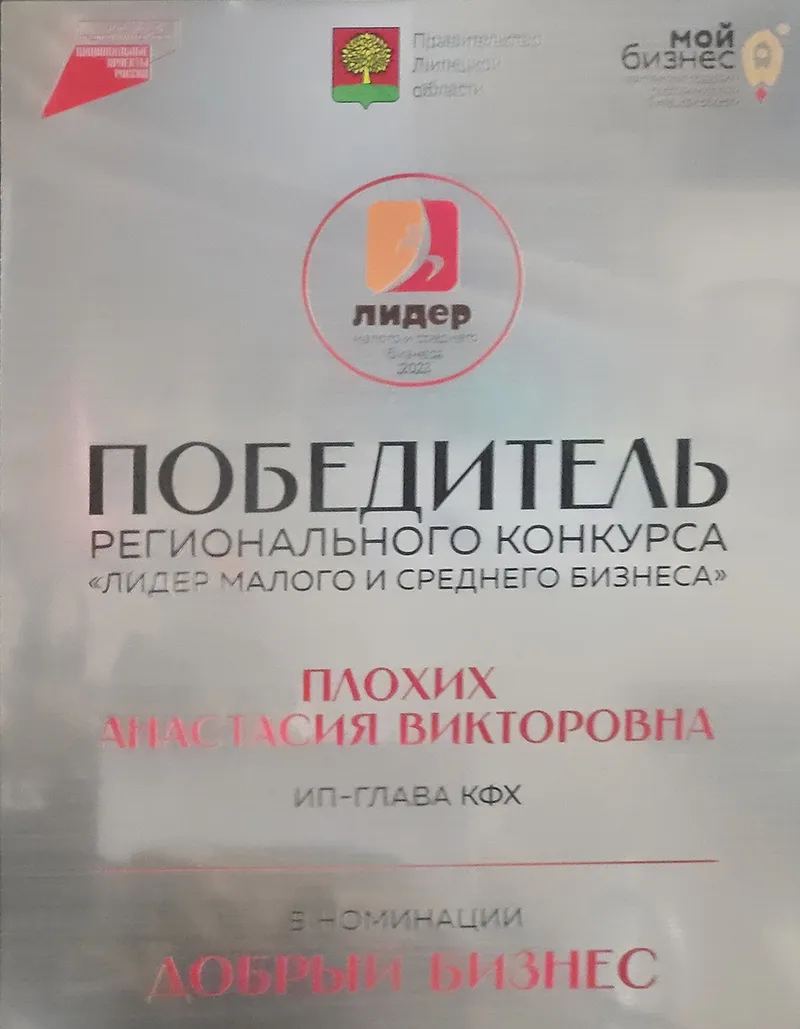
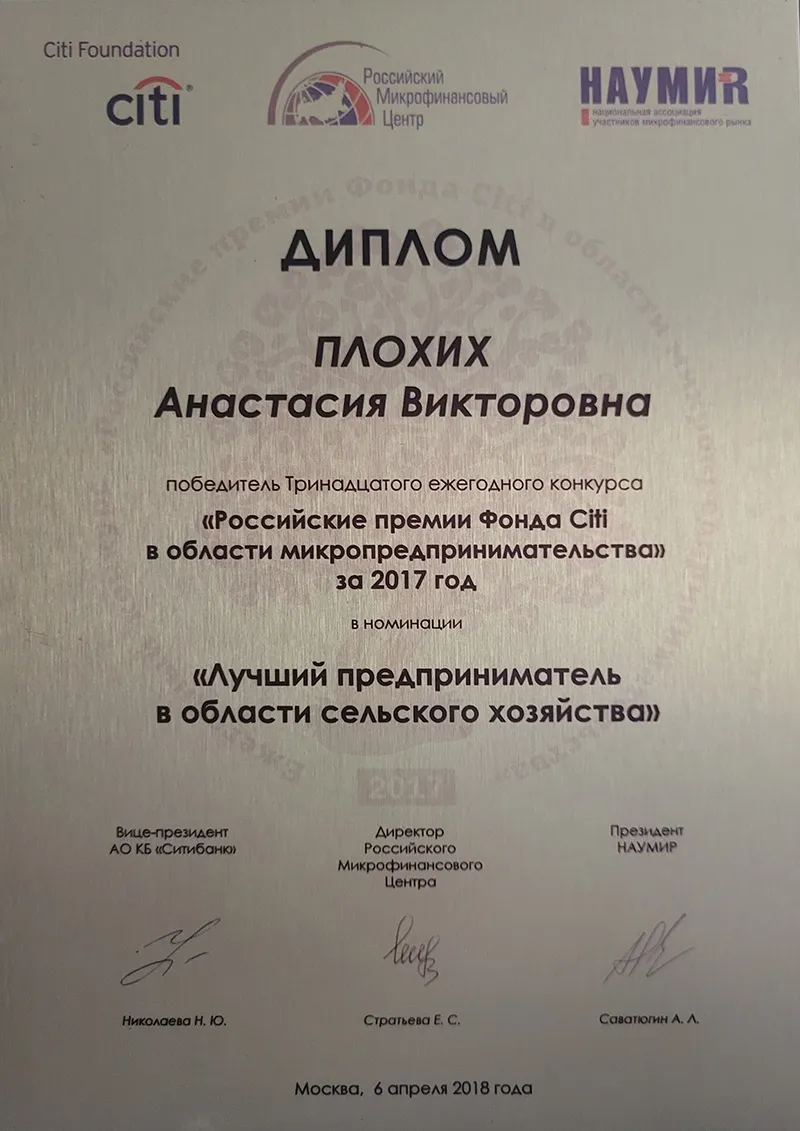
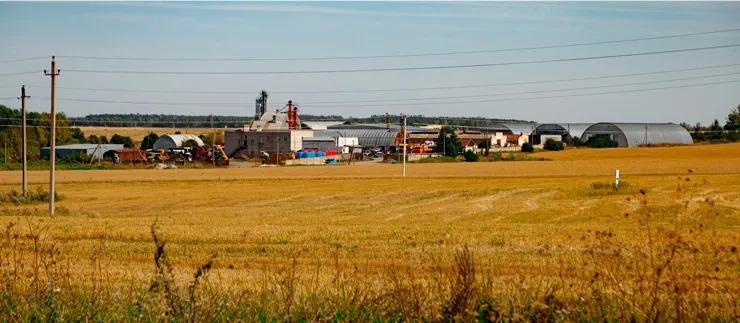
Viktor Dmitrievich Plokhikh in agriculture since 1991. The farm grows such crops as sunflower, malting barley, winter wheat, lupine, buckwheat. Cultivation of lupine began to be engaged in since 2014. Seed production is being developed in co-operation with the Russian State Agrarian University - Timiryazev Moscow Agricultural Academy. The Plokhikh farm has been a training and production base for this leading educational institution for several years.
Viktor Dmitrievich Plokhikh in agriculture since 1991. The farm grows such crops as sunflower, malting barley, winter wheat, lupine, buckwheat. Cultivation of lupine began to be engaged in since 2014. Seed production is being developed in co-operation with the Russian State Agrarian University - Timiryazev Moscow Agricultural Academy. The Plokhikh farm has been a training and production base for this leading educational institution for several years.
since 1991

Intended for use for feed purposes and for processing. White lupine grain can be used as a high-protein supplement instead of soya meal in the diets of cattle, pigs and poultry.

Grain with high crude protein content (37-38%) for the production of high-protein feed products for use in poultry and high-yielding animal diets and high-yielding animals.